On choosing fewer flowers
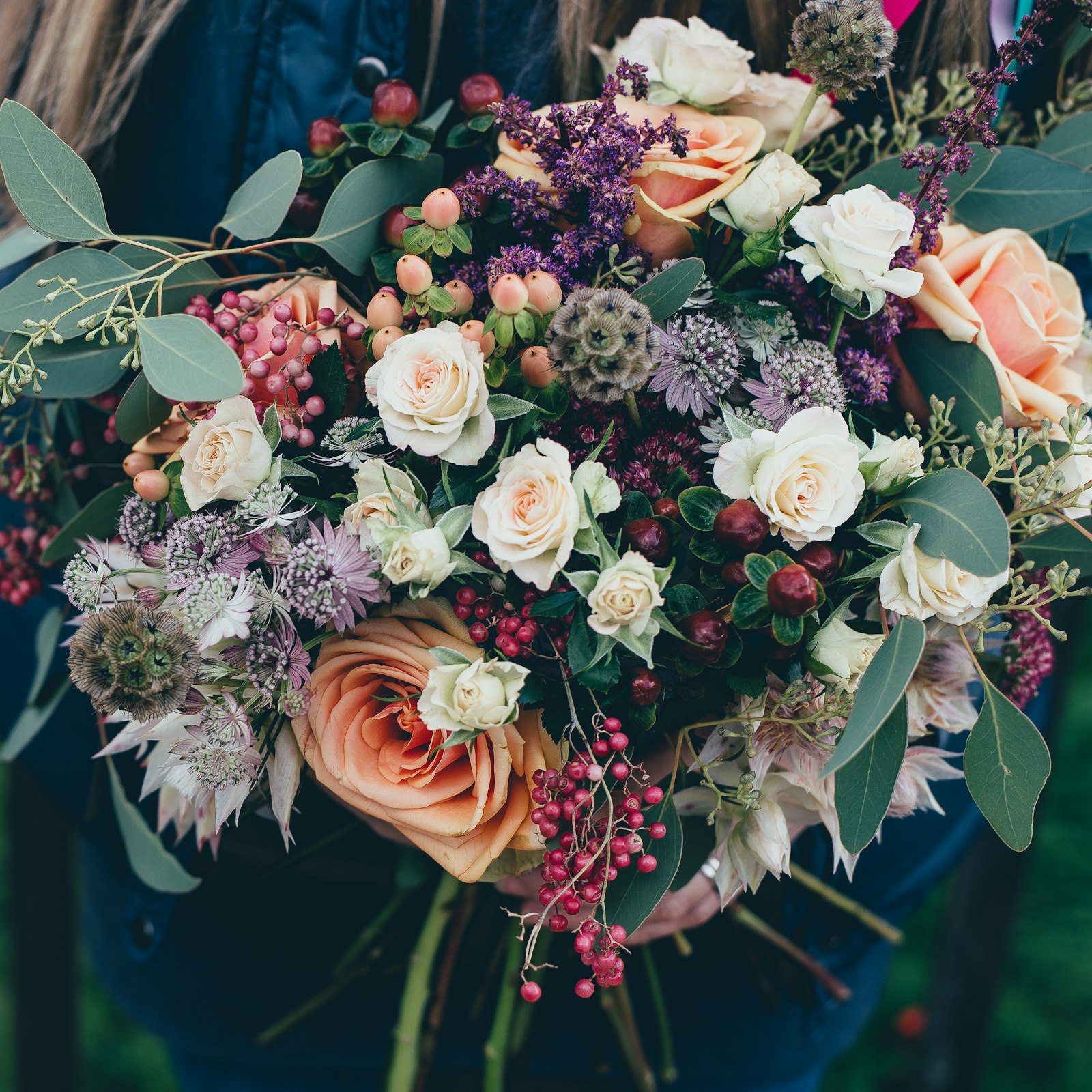
There is a particular look, well-photographed and very expensive, that defines a certain stratum of British wedding floristry in the mid-twenties. Fifteen-foot meadow-tablescapes. Hanging cloud installations of forty kilos of foliage above the dance floor. Ceremony arches the size of a small car. Each one is beautiful in the photograph. Each one costs between £8,000 and £18,000. Each one is, almost without exception, the line item couples regret most when they see the final invoice.
We are gentle about this with couples on the way in and we are firm about it on the way through. Fewer flowers, better placed, photograph better than more flowers worse placed. They cost less. They survive a windy afternoon. They smell of something. They allow the room itself to be the room.
What "fewer" actually means
Concretely, for an eighty-guest wedding in a pretty venue: a bridal bouquet, four bridesmaid bouquets, four buttonholes, two arrangements at the ceremony point, and seasonal runners or low arrangements down the centre of the dining tables. That is the entire scheme. It will cost between £1,400 and £2,200 with a thoughtful florist working in season. It will not embarrass the venue or the dress.
What it will not include: an arch at the ceremony, a hanging installation above the dance floor, separate altar arrangements, separate aisle markers, a separate scheme for the bar, separate pieces for the toilets, separate pieces for the welcome table, and the two large urns either side of the doorway. None of those things are wrong. All of them are optional. None of your guests will notice their absence; many of them will notice their presence and quietly tally the cost.
The seasonal argument, properly made
British seasonal floristry in 2026 is genuinely better than it was even five years ago. Cut-flower farms across Sussex, Cornwall, Yorkshire and East Lothian now supply florists directly, and the quality of stem available between April and October from British growers is comfortably the equal of imported Dutch wholesale.
The price advantage is real but is not the main reason to choose seasonally. The main reason is that British seasonal stems look as if they belong in a British venue. Peonies in May, roses and sweet peas in June, dahlias and cosmos in August, hydrangeas and seedheads in September. Each of these reads, on the day, as if the flowers walked in from the garden. Imported tulips in October read as if they were flown in from a Dutch warehouse, because they were.
Ask your florist directly: "What is in season the week of the wedding from British growers, and could the scheme be built around that?" The good ones will warm to the question. The ones who do not are telling you something useful.
The single most under-rated flower decision
Repeat the bridal bouquet. The same flowers, in the same proportions, in the bridesmaid bouquets, the buttonholes, and the table runners. The room reads as one room. The photographs read as one wedding. The cost falls because the florist is buying one set of stems in volume, not five sets in small quantities.
It is the discipline that separates a wedding from a flower fair. And it is, almost always, the decision the bride is most pleased about three months later, when she is looking at the photographs and noticing for the first time how calm the room felt.
If this is the kind of thinking you want on your wedding, Sposa is £24 a month — 7 days free to start.
More from Sposa.